



Rediscovering Strength: Starting Simple Exercises Over 65
Entering the golden years can often be accompanied by a sense of loss—loss of strength, loss of mobility, and in some cases, the loss of the confidence to stay active. Many adults over the age of 65 who haven't exercised in years express the same feelings: they don't know where to began, and they worry that they have missed their chance to regain their strength and agility. Good news for those feeling this way: it’s never too late to start! Here are five simple exercises tailored for those who have stopped exercising for years, aimed at rebuilding strength, balance, and mobility—all without needing a gym.
Wall Push-Ups: Building Upper Body Strength
The wall push-up is an effective way to rebuild pushing strength. It engages muscles in the chest, shoulders, and arms, helping individuals perform daily tasks such as getting off the floor or opening a heavy door. To begin, stand an arm's length away from a wall, preparing to lean into it.
How to Do It: Place your hands on the wall at shoulder height, just wider than your shoulders. Keeping a straight line from your head to heels, bend your elbows to lower your chest toward the wall. Push back to starting position.
Sets and Reps: Aim for 8 to 12 repetitions for a couple of sets. Once comfortable, progress by moving your feet back or using a kitchen counter.
Step-Ups on the Bottom Stair: Strengthening Legs
Step-ups are vital for developing leg strength, essential for navigating stairs and curbs. This exercise also enhances balance, building the skills needed for daily movements.
How to Do It: With a firm grip on the banister, step on the bottom stair with one foot, then bring the other foot up. Step back down carefully, alternating feet.
Sets and Reps: Complete 8 to 10 reps leading with one leg then switch. Take breaks as needed.
Heel-to-Toe Walk: Enhancing Balance
This walking drill trains the muscles necessary for maintaining balance. It works by narrowing your base of support and helping you to make small adjustments as you navigate through space.
How to Do It: Stand next to a kitchen counter for support. Walk forward by placing your right heel directly in front of your left toes, and reverse the process as you come back.
Sets and Reps: Do this for a total of three lengths up and down the counter, taking your time and focusing on your balance.
Seated Trunk Rotations: Restoring Flexibility
Sitting down isn’t just comfortable; it’s also ideal for bringing back the twisting motion that might be overlooked as we age. It helps ease stiffness and encourages spinal mobility.
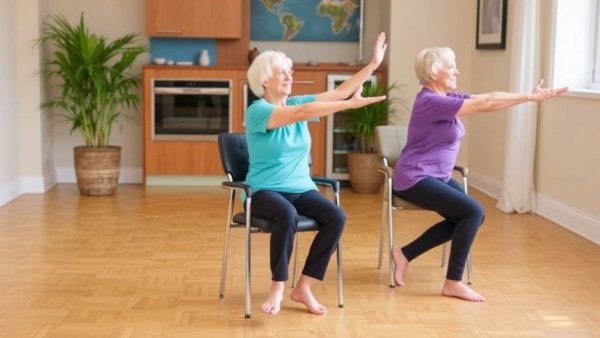
How to Do It: While seated in a firm chair, back straight and feet flat, cross your arms on your chest and gently turn your shoulders to one side, then the other.
Sets and Reps: Aim for 8 rotations on each side, utilizing controlled motions to enhance effectiveness.
Seated Band Rows: Posture Improvement
To counteract the forward hunch typical of years of inactivity, seated band rows focus on back strength. They help improve posture and ease the labor of lifting and carrying.
How to Do It: By sitting at the edge of a chair, loop a light resistance band around your feet, and pull the ends towards your lower ribs, keeping your elbows in close.
Sets and Reps: Aim for 10 to 12 repetitions for each of two sets.
Why Exercise Matters After 65
The journey of re-engaging with physical activity post-inactivity isn’t merely about strength; it’s about restoring the confidence that age and inactivity may have robbed from you. Through these five foundational exercises, the increasingly common challenges of balance, strength, and mobility can be addressed.
Notably, with consistent practice, many individuals start noticing improvements within just a few weeks. Tasks that once seemed daunting become feasible, and those beginning steps towards improved fitness have profound impacts on daily life.
Taking Precautions
Safety is paramount. Those with pre-existing health conditions should consult a doctor before starting, and modifications or assistance should always be at hand, whether from a sturdy chair or a supportive hand on a counter.
A Weekly Routine for Sustained Progress
In your first two weeks, your focus should be on all five exercises every other day, with each session lasting about 10 to 15 minutes. As your strength builds, increase the occurrences per week and the number of sets accordingly. Incorporating a daily walk into this routine will also benefit overall mobility.
As you embark on this journey, remember, change is gradual and requires patience—every little bit counts towards regaining your independence and improving your quality of life. Don’t hesitate; your path to a stronger and more vibrant you awaits. Start today!



Write A Comment