


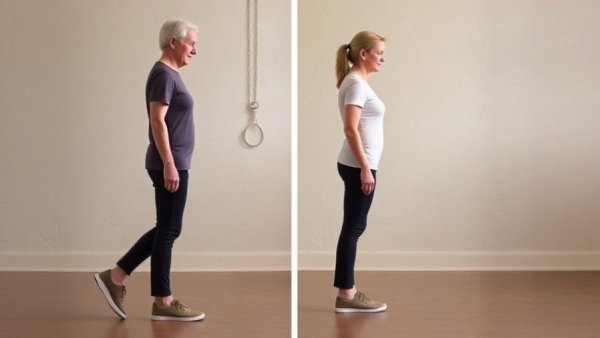
Strengthening Balance After 75: More Than Just Walking
As we age, maintaining balance becomes increasingly vital, particularly after 75. While walking is foundational for heart health and endurance, it alone isn't enough. If you are over 75, consider incorporating targeted exercises that build balance functionality and prevent falls. In my years of coaching older adults, I’ve noticed that a robust walking routine doesn’t automatically improve situational awareness like turning your head or reaching down. These nuances are crucial for staying upright.
Five Exercises That Make a Difference
Here's where standing exercises come in handy. Below are five effective movements designed to enhance balance beyond what walking offers. They emphasize looking, reaching, rising, turning, and stepping—elements of daily life that are often overlooked in a standard walking routine. Aim to perform these exercises three or more times a week alongside your regular walks, gradually increasing intensity every 12 weeks as your confidence grows.
1. Feet-Together Head Turns: Control Your Upper Body
Looking over your shoulder to check traffic or hear someone call your name can be a subtle test of balance. This exercise grounds you by ensuring your feet remain steady while you engage your neck. Stand next to a sturdy counter, keep your feet together, and turn your head slowly from side to side, letting your eyes lead while your trunk remains stationary.
How to Do It:
- Stand with feet together, hand on the counter.
- Turn your head slowly side to side.
- Nod up and down without shifting your weight.
- Perform 10 turns each way for 2 rounds.
2. The Counter Reach-and-Return: Add a Reach
This exercise beautifully mimics everyday actions, like reaching for an item on a shelf. Start by standing side-on to the counter with one hand resting on it and a light dumbbell in the opposite hand. This engages not only your arms but also compels you to control your weight distribution as you shift forward and back.
How to Do It:
- Reach forward at shoulder height, then return.
- Shift your reach across your body, maintaining control.
- Do 6–8 repetitions in each direction.
3. Hands-Free Sit-to-Stand: The Importance of Stability
Sit-to-stand transitions often challenge balance. The pause when you stand represents a key moment. You practice standing still before stepping away. Here’s how you can progressively challenge yourself.
How to Do It:
- Start with a sturdy chair, hands on the armrests.
- Stand, then try to cross your arms and hold still for three seconds.
- Gradually increase to five seconds, aiming to stand hands-free.
- Perform 2-3 sets of 5-8 reps.
4. Walk and Turn: Navigating Through Life
This exercise focuses on changing directions, a skill developed through daily activities. Walking in a straight line is seldom as challenging as requiring quick directional changes.
How to Do It:
- Walk alongside the counter, keeping your hand lightly touching it.
- Turn around in small steps and alternate hands on the counter as you pivot.
- Practice walking back and forth, rotating directions after every length.
- Complete 4–6 lengths.
5. Step-Over Walk: Raising the Bar
The most difficult exercise, the Step-Over Walk, sharpens your balance and foot awareness. By stepping over objects, you train not only your legs but also your eyes to fix forward—a vital aspect of maintaining balance.
How to Do It:
- Place three rolled towels apart, creating hurdles.
- Side by side with the counter, step over each towel and land softly.
- Pause for a moment on the new leg before stepping over the next towel.
- Complete 2-3 passes in each direction.
Why Knowing These Exercises Matters
Engaging with these exercises enriches your ability to move safely and confidently. While each step, lift, and turn builds strength, they also boost your ability to navigate your environment independently.
Conclusion: Stay Active and Engaged
Improving balance is not merely for preventing falls; it enhances the quality of life. While walking remains an important part of your routine, integrating these standing exercises ensures you are ready for the daily challenges life presents. So lace up those sneakers, pull out those dumbbells, and make balance a priority in your life!





Write A Comment